OUGD406: Design Practice 1 - DESIGN IS ABOUT DOING


This study task is in response to a live brief, hosted by Tallent House, the contest specifics are below.
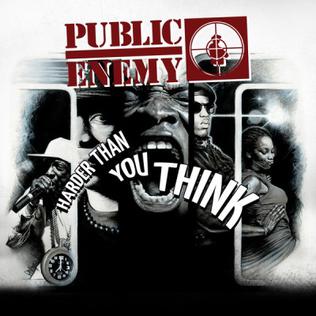
Contest: Secret 7''Work: Submit artwork inspired by Public Enemy's track, Harder Than You Think.Prizes:Host Choice and Additional Winners:Between 30-50 designs will be selected and printed on a Secret 7’’ vinyl sleeve which will be exhibited and sold at the gallery. In addition, each winner will also receive:
  • An A3 print on which will be their design and a certificate of their involvement in the project
  • Exposure for their artwork both online and in the exhibition space at the UK’s largest independent creative agency, Mother
  • One design will be picked by Clash magazine and featured in their June edition
Highest Voted Winner:
  • One highest voted artist will receive the incentive as offered to the 30-50 winners selected by Secret 7’’.
Entry Period: January 7 2013 to February 18 2013Voting Period: February 19 2013 to February 26 2013Winner contaced by: March 12 2013


Below, you can see the album cover for Harder Than You Think. 


OUGD401: Lecture Notes - Photograph as Document


Helen,clarke@leeds-art.ac.uk

  • We associate photograph as document as a type of truth.
  • There's always a balance of power between the photographer and the subject, one has more power than the other, usually, you'd expect it to be the photographer.

  • William Edward Kilburn 'The Great Chartist Meeting At The Common' 1848.
  • They're attempting to reform the laws, and the conditions of the work place. 
  • Use of the camera to privilege certain moments in history.
  • It gives us a window in the event, it acts as proof this happened.
  • Photographer's presence isn't acknowledged in the image.

  • "In many contexts the notion of a literal and objective record of history is a limited illusion. It ignores the entire cultural and sosicla background against which the image was taken." Grahame Clarke 
  • "How the other half live" Jacob Riis, 1890.
  • 'Bandit's Roost, 59 1/2 Mulberry"
  • In Riis' images, as a guest as a middle class male, which access to the technology, his subjects do not have access to his tech'.
  • They're being told what to think by the photographer.
  • The way the figures stand in the street, we can see they're looking in interest towards Riis.
  • "A Growler Gang in Session (Robbing a Lush" 1887
  • They're nothing documentary about this image at all, it's purely constructed.
  • "Russian Steel Workers, Homestead, Pa.," 1908, Lewis Hine
  • Another group of people who feel have presence, there's eye contact, we're making a connection.
  • "Duffer Boy", 1909, Hine
  • He never exploits his subjects,
  • Hine doesn't attempt to shock the viewer, he reports the condition.

  • F.S.A Farm Security Administration
  • "Sharecroppers Home" 1937 Margeret Bourke-White 
  • This would have been in a magazine, where text would be with the image, to confirm the truth.
  • "Interior Of a Black Farmers House" 1939, Russel Lee
  • His image is more like a press photograph, less composition, new human presence in the image. 
  • "Migrant Mother" 1936, Dorothea Lange
  • She describes the woman as an object, not asking her questions, or even her name. 
  • She saw the photo opportunity and took it.
  • "Floyd Burroughs (George Gudger), Hale County, Alabama" 1963, Walker Evans
  • The photo is a 4:5 photo, no cropping, with the original edge on. 
  • Asthetic-sising poverty, almost making poverty look beautiful, the human spirt rising above the conditions. 
  • "Graveyard, House & Steel Mill, Bethlehem, Pennsylvania", Walker Evans
  • "Northumberland Miner at his evening Meal" 1937, Bill Brandt. 
  • Making significant all the objects in the image, it's not a document, everything is symbolic, there's nothing usual about the objects featured around the subjects. 
  • "Parade - Hoboken, New Jersey" 1958, Robert Frank 
  • A privately funded project, externally. And he has a certain about of freedom as expression
  • He begins to redefine document photography.
  • He uses the caption to contradict the image.
  • He isn't showing the parade, in the photo shows people standing at the window, watching the parade. 
  • "St. Patricks's Day, Firth Avenue" 1954-55, William Klien
  • In all of this photographs, someone is looking into the camera, acknowledging Klien's presence.
  • This makes us feel less voyeur. 
  • "Dance In Brooklyn" 1955, William Klien.
  • There's a very dark connotation to the image, using grain and blur. 

  • Magnum.
  • Cartier-Bresson & Capa.
  • The Decisive Moment - "photography achieves its highest distinction - reflecting the universality of the human condition in a never-to-be-retieved fraction of a second" - Cartier-Bresson.
  • Surrealism

  • Documentary in War
  • "The Falling Soldier" 1936, Robert Capa.
  • The image was originally recognised as the moment of the soldiers death being captured on film. 
  • However, this is disputed, they say this was not real, it was taken 50km for the stated location.
  • A debunking of the myths of a decisive moment in war.
  • "Normandy, France" 1945, Robert Capa
  • He uses blur to imply his presence in the water, the merge of the gun and the camera.
  • "Bergen-Belsen Concentration Camp" 1945, George Rodger
  • The way he's photographed this bodies he's kept a respectful distance. I could use close ups, which would depict horror. 
  • "Buchenwald" 1945, Lee Miller
  • "Accidental Napalm Attack" 1972, Hung Cong Ut.
  • Is it the photographer's role to document, or to intervene? 
  • "People About to be shot" 1969, Robert Haeberle
  • He shouted "Hold it" before he took the image, he halts the process, implicit within the shooting itself, other-rides any human response to the work.
  • "Shell Shocked Soldier" 1968, Don McCullin
  • The effect of war. We're seeing the trauma, and in a way, McCullin's own trauma. 
  • Colour images, 'Realer than real'.

  • Documentary Exhausted (Clarke 1997;163)
  • Documentary Constructed: William Neidich (1989) constructs images which are missing from history, photographing things which would have been impossible to photograph. 
  • For example taking pictures of native american woman having knives held to their face, which would have been impossible. Using 19th century processes. 
  • "Native North Americans" Early C20th, Edward Curtis
  • Documenting the tribal disappearance.
  • "Nuba Tribesmen, Victor of a Wrestling Contest"
  • "The Battle of Orgreave" 2001, Jeremy Deller - recreating a riot from the 1980s in 2001.

OUGD401: Lecture Notes - Advante-Garde Cinema


  • Richard Miles - richard.miles@leeds-art.ac.uk

  • In opposition to mainstream cinema.
  • A critical attack on Hollywood cinema, being different in everyday.
  • Non Linear/Non Figurative/Non narrative.
  • Open audience, rather than closed.
  • Requires a different kind of spectatorship.
  • Create your own meaning to the film.

  • 'Un Chien Andalou' (1929) Luis Bunuel.
  • Plot was constructed with Salvador Dali.
  • Surrealist feeling to the film.
  • Can be seen as a metaphor for the weight of the world, social and sexual oppression. 
  • Cremaster 3 (2002) Matthew Barney.
  • Starring himself,
  • He was going on a quest to climb the gugamhimeh, being stopped by show girls, and two american hardcore rock bands.

  • Spirals (1926) Oskar Fischinger
  • Playing with optics
  • Showed at the Bauhaus.

  • Lapis (1966) James Whitney
  • Bohemian
  • Synthetic sounds, creating by new electronic instruments which became popular in the 60s, as the 'new sound'.
  • People write about it as a form of poetry

  • Black Ice (1994) Stan Brakhage
  • physically modified the film stripes, scratching, painting, drawing.
  • Mothlight (1963)
  • made using the same process as Black ice.
  • Window Water Baby Moving
  • Attempts to make a hypnogogic feeling, the state between waking and sleeping. 
  • Nothing makes sense, but your brain is half conscious, feeling. 

  • Empire (-) Andy Warhol 
  • Static camera filming the empire state building for 10 hours.

  • All these films take the idea of cinema and remove it, and look at cinema from a new point of view. 
  • They're not made for money, so there's a feeling of honesty from them, however, since they're not made to make money, they're never shown.

OUGD401: Lecture - Creative Advertising & New Media


Janine Sykes - Year Tutor - Creative Advertising

  • Understand distinctions between mass and new media
  • Consider shifts in aspects of advertising strategy
  • Speculate the implication of NM on creativity
What is new Media
  • 'media that work not through persuasion or impressions but through engagement and involvement'. (Sutherland, 2009)
  • Need to break with a past media 'model'
Advertising Strategy
  • Required speaking to the masses
  • Global print campaigns
  • Imagery of Britannia & Royalty suited all domestic and imperial markets
  • High-feeling strategy (signs = patriotism & empire)
High Feeling Strategy Today
  • Remember Reach Campaign (2010) AgencyTwoFifteen and AKQA
  • Launch Film Birth of a Spartan - announce Reach Beta.
  • 3 x Films prior and 4th film released after website debut
  • doom planet films, 700 millii Spartans fight to end
  • High-feeling strategy: loos, hope and remembrance
  • audience involved emotionally, through website campaign. 
  • http://rememberreach.com
  • Each person becomes a dot of light, moulding the shapes of the spartans, becoming part of the sculpture.
  • (creativity online)
Old and New communication Models
  • Old transmission
  • Transmit ideas to an audience
  • New cybernetic
  • Engage with an audience
  • Via computer (mediated communication cmc)
  • new mdi a based on… (ICTs) such as the internet and cell phones, invite us to think in exciting new ways about advertising, as an industry and communication process (Spurgeon, 2008)
Illustration
  • The Kaiser Chefs' Bespoke Album Creation Experience (YouTube)
  • In collaboration with Universal Music Group.
  • Listen to 20 songs, choose 10 - make your own album.
  • Marketed at £7.50, which you can advertise, and make £1 back when someone else buys your version of the album.
  • Design your own cover.
  • You get your own webpage.
  • Designed to emotionally engage the audience
New Media Model
  • Advertising & New Media (Spurgeon, 2008)
  • Shift from Mass to My Media
  • More targeted (mobile)
  • Audience involvement:
  • a) voluntarily passing viewing ads (virals)
  • b) creating spoofs or filming events
  • More personalised - sharing with your friends
Viral; unpaid Advertising
  • Unpaid sponsor using the internet to persuade others to view content.
New Way of Communicating
  • Virals (ads) becoming part of our conversations
  • BMB after labour account
  • May elections 2010
  • Sent to Friend (Anti-Tory campaign YouTube)
  • From talk about to walk with
  • Trevor Beattie (BMB) Hello Boys & FCUK
Two Conversations
  • Thee Little Pigs Viral 992
  • Recession & Riots
  • BBH
  • Client is The Guardian
  • TV & Print
  • Celebration of NM itself; citizen journalism, open platform collaboration.
  • Idea transform brand from newspaper to; global news hub.
  • 'modern news is dynamic, participative' (Gonsalves, 2012) Head of Strategy, BBH London
Conversation three Invisible Children Campaign
  • R4 ICC Congo WarLod Lubanga guilty 30 years
  • March th released
  • 3 days 26million views. 5th day, 63 million views
  • Kony 2012 Campagin
Beattie The Big Creative Idea
  • Internet biggest idea since the wheel
  • Enables lots of small ideas to circulate
  • 'the combination of a trillion littles ideas to form one big idea.
Viewer Generated Content
  • Case-Study Coke-Mentos
  • Viewer-generated advertising worth US $10 millions to Mentos 'more than half it's annual advertising budget.
  • New Media threatens the top-down communication model
  • Audiences are actively managing media culture.
Creating a Dialog
  • Paul Burns (TBWA) 'talking with audience'
  • 40 million Old Spice (Advert)
  • Responding to a Tweet
  • The making of Old Spice: copywriter & Art Director Craig Allen & Erik Kallman W & K.
  • Released adjacent to the American Superbowl.
  • Actor X-Footballer/superbowl player ran opine then TV.
  • SEM (Search Engine Marketing) Keywords Superbowl
10 Reasons why this is the best time to be in advertising 
  • An audience with Sir John Hegarty, 25.3.10
  • No. 1 Agencies can innovate e.g NYC tourism campaign
  • The idea NYC = street culture = street musicians
  • Linked 2 campaigns "Oasis - Dig Out Your Soul" Getting Street Performers to play songs front their up-and-coming unreleased Album, Global distributions.
  • Announcements made websites with Google Maps
The Third Screen
  • Mobile phones will soon become the greatest tool for persuasion, more so than any other medium.
The Kairos Factor
  • Fogg (2003) primarily due to their kairos fact:
  • The principle of printing the desired message at the opportune moment
  • Location
  • Routine
  • Task
  • etc.
What is the impact of new media?
  • On the advertising agency
  • Industry debate
  • Mashup 09
  • "Structure the company to be social from the inside is necessary' Patrick (2009)
  • Digital Creatives (third role)
Putting Brands In People's Hands
  • No medium is dying eg.g Prit
  • Media different role in a narrative
  • Traditional announcements
  • Levis Go forth beautifully crafted photography
  • Wrangler jeans interactive site, like Remember Reach
  • NM up-close and tactile
Levi's Go Forth Campaign
  • Highly crafter film & photography
  • Walk Whitman poetry
  • Website
  • Global Go Forth Campaign
  • Wieden and Kennedy
  • Launch film Facebook
  • Cinema, then TV.
Future
  • Illustrating the future Nike
  • Give people tools - life enhancing
  • Google and Facebook model
  • Nike plus - how run record
  • Nike Grid - training aid into 'game'
  • London transformed game board position recorded & compared against others.
  • Overlay of experiences


OUGD405: Design Process - Collect, Catagorise, Communicate - Stamp Collector's Packs

Design Practice Post

I've decided to create a stamp booket, similar to one you would get if you were to join a stamp collectors' club. They usually contain the stamps in the collection, and information about them. I'm trying to find a already existing format to base my designs from. So, I've collected some stamp collection-booklets below. 


The first, above, is a diamond jubilee stamp booklet, containing two stamps and information about the subject, queen Elizabeth. This booket is presented in a triple spread format, similar to a brochure. It also uses the royal violet throughout, and monochrome images, being in a tint of purple and greyscale, limiting the colour scheme to sleek purples, blacks and whites. 
The second a double-page-spread style stamp booklet for The Australian Army, displaying 7 stamps and information about them, and what they relate to, presumably, The Australian Army. This like the Diamond Jubilee. 


OUGD405: Design Process - Research, Collect, Communicate: PRODUCT

Design Practice Post

For this section of the brief, I was looking to, possibly, incorporate Frank Lloyd Wright's works into stamps, showcasing his most famous works, with their name and date on them. Sadly, with these I wouldn't be able to incorporate many facts on them, other than the date of construction, or rendering, for those which were never built. 

If I were to choose this idea, I would want to modernise the style of Frank Lloyd Wright's work, rather than using his hand rendered sketches, or photographs of his work, I would much rather use vector shapes, put together to create a interpretation of his work. Below, you can see an image taken from DeviantART user shoelesspeacock, who, focuses on this unique style of creating objects, machinery and  animals using vector shapes and lines.


I managed to find a selection of C19/20th inventions which shoelesspeacock created using is fantastic style, which conveniently, are on stamps. I really admire the simplicity of this designs, how the shapes and lines take the form of something intact and unique, for example; above you can see The Rocket, dubbed 'locomotive', which usually looks something like this: The Stephenson's Rocket (Photographed by me.) However, shoelesspeacock uses lines to simulate parts of the locomotives which would usually be solid, for example, across the middle of the rocket there is a large yellow drum/barrel which houses all the mechanics, in the vector drawing he uses lines to simulate the curvature of the drum. He also uses this on the funnel, which, sadly in the photograph I've taken is folded down, but you can see it's a cylinder shape, which he replicated with vertical lines. Essentially, you could say he's drawing in a schematic style, similar to that of an Architect.

I plan to test this style on one of Lloyd Wright's works, I've decided to use his well renown Falling Water. Using the book, Frank Lloyd Wright Sketches, Plans and Drawings (2011), I have access to all the sketches, schematics and renders of Falling Water.


Early perspective drawing.


Early perspective drawing.


Final plan schematic.


Preliminary elevation.


Preliminary plan.
OUGD401: Lecture Notes - Fashion as Photograph


OUGD405: Design Process - Study Task 3 - Frank Lloyd Wright


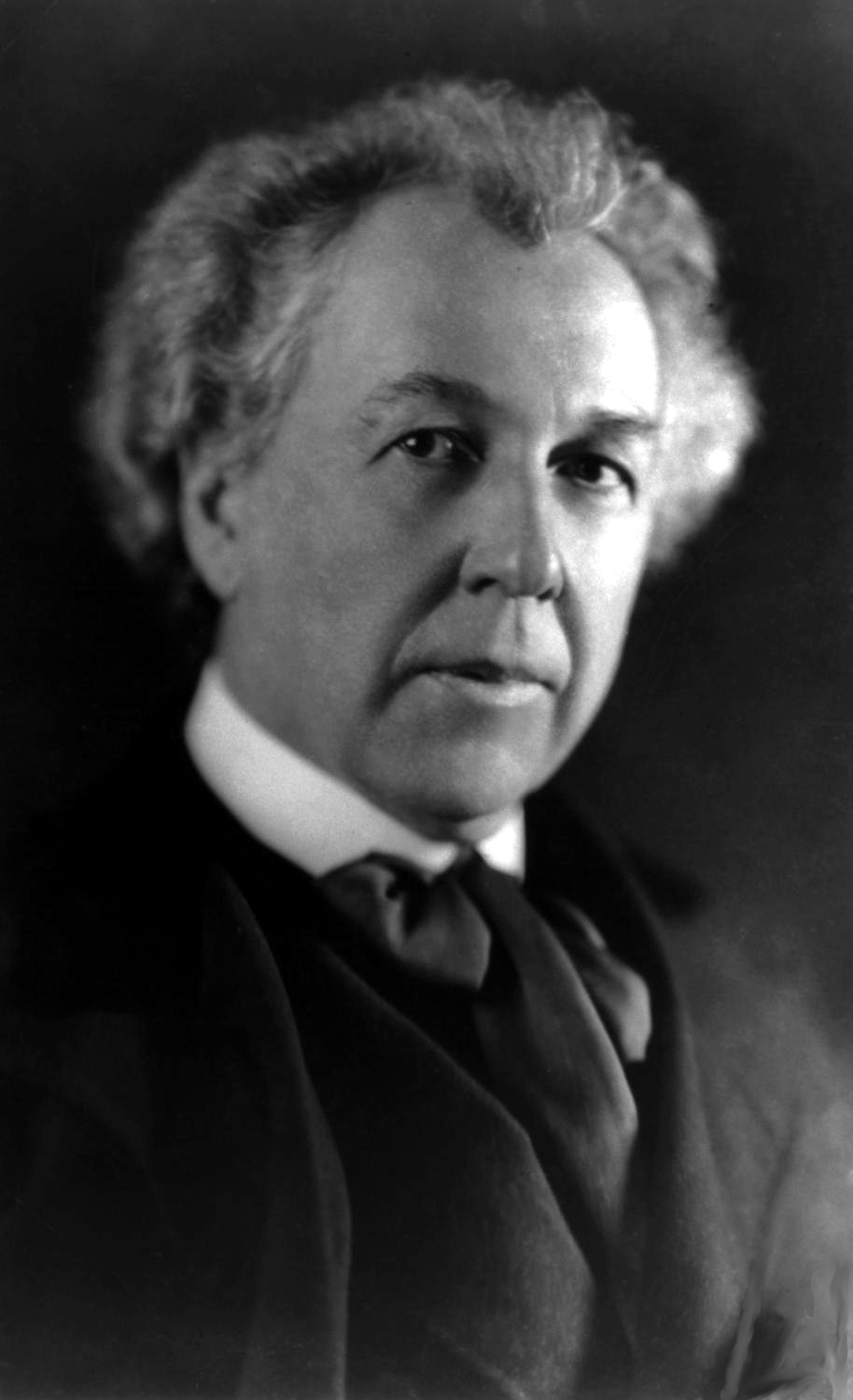
For this research topic, I was given the world famous architect, Frank Lloyd Wright, who's designed several intricate, modern, beautiful buildings.  All of which, seem to have a very distinct geometrical style, I'm looking forward to researching him.


Frank Lloyd Wright - and Overview

Frank Lloyd Wright (born Frank Lincoln Wright, June 8, 1867 – April 9, 1959) was an American architect, interior designer, writer and educator, who designed more than 1,000 structures and completed 500 works. Wright believed in designing structures which were in harmony with humanity and its environment, a philosophy he called organic architecture. This philosophy was best exemplified by his design forFallingwater (1935), which has been called "the best all-time work of American architecture". Wright was a leader of the Prairie School movement of architecture and developed the concept of the Usonianhome, his unique vision for urban planning in the United States.

His work includes original and innovative examples of many different building types, including offices, churches, schools, skyscrapers, hotels, and museums. Wright also designed many of the interior elements of his buildings, such as the furniture and stained glass. Wright authored 20 books and many articles and was a popular lecturer in the United States and in Europe. His colorful personal life often made headlines, most notably for the 1914 fire and murders at his Taliesin studio. Already well known during his lifetime, Wright was recognized in 1991 by the American Institute of Architects as "the greatest American architect of all time."
http://en.wikipedia.org/wiki/Frank_Lloyd_Wright 

From this extract from his wikipedia page, I learnt that, "several" buildings, of which he designed, is a vast understatement, he has in fact designed 1,000 structures, and completed 500 works, which is a very significant amount, the opening paragraph also states some of his signature works, which I shall do some more research into. 

I've also ordered the education text book:  Frank Lloyd Wright's Sacred Architecture: Faith, Form and Building Technology, A. Geva (2011), which upon receiving I intend to obtain most of my information from. 


Fallingwater - and Overview
Fallingwater or Kaufmann Residence is a house designed by architect Frank Lloyd Wright in 1935 in rural southwestern Pennsylvania, 43 miles (69 km) southeast of Pittsburgh. The home was built partly over a waterfall on Bear Run in the Mill Run section of Stewart TownshipFayette County, Pennsylvania, in the Laurel Highlands of the Allegheny Mountains.
Hailed by Time shortly after its completion as Wright's "most beautiful job", it is listed among Smithsonian's Life List of 28 places "to visit before you die." It was designated a National Historic Landmarkin 1966. In 1991, members of the American Institute of Architects named the house the "best all-time work of American architecture" and in 2007, it was ranked twenty-ninth on the list of America's Favorite Architecture according to the AIA

The Design Process
Almost forgotten at age 70, Frank Lloyd Wright was given the opportunity to re-emerge on the architectural scene with his design and construction of three buildings. His three great works of the late 1930s—Fallingwater, the Johnson Wax Building in Racine, Wisconsin, and the Herbert Jacobs house in Madison, Wisconsin—brought him back to the front of the architectural pack.
Edgar Kaufmann Sr. was a successful Pittsburgh businessman and president of Kaufmann's Department Store. His son, Edgar Kaufmann, Jr., studied architecture briefly under Wright.
Edgar Sr. had been prevailed upon by his son and Wright to itemize the cost of Wright's utopian model city. When completed, it was displayed at Kaufmann’s Department Store.
The Kaufmans lived in “La Tourelle”, a French Norman estate designed by celebrated Pittsburgh architect Benno Janssen (1874–1964) in the stylish Fox Chapel suburb in 1923 for Edgar J. Kaufmann.
The Kaufmanns owned property outside Pittsburgh with a waterfall and cabins they used as a rural retreat. When the cabins deteriorated, Mr. Kaufmann contacted Wright.Wright visited Bear Run on Tuesday, December 18. The Kaufmanns and Wright were enjoying refreshments at La Tourelle when Wright, who never missed an opportunity to charm a potential client, said to Edgar Jr. in tones that the elder Kaufmanns were intended to overhear, “Edgar, this house is not worthy of your parents...” The remark spurred the Kaufmanns' interest in something worthier. Fallingwater would become the end result.
In November 1934, Wright visited Bear Run and asked for a survey of the area around the waterfall. One was prepared by Fayette Engineering Company ofUniontown, Pennsylvania including all the site's boulders, trees and topography, and forwarded to Wright in March 1935.
As reported by Wright's apprentices at Taliesin, Kaufmann Sr. was in Milwaukee on September 22, nine months after their initial meeting, and called Wright at home early Sunday morning to surprise him with the news that he would be visiting Wright that day before lunch. He could not wait to see Wright's plans. Wright had told Kaufmann in earlier communication that he had been working on the plans, but had not actually drawn anything. After breakfast that morning, amid a group of very nervous apprentices, Wright calmly drew the plans in the two hours in which it took Kaufmann to drive to the Taliesin.
It was at this time that Kaufmann first became aware that Wright intended to build the home above the falls, rather than below them to afford a view of the cascades as he had expected. It is said that Kaufmann was initially very upset that Wright had designed the house to sit atop the falls. He had wanted the house located on the southern bank of Bear Run, directly facing the falls. He had told Wright that was his favorite aspect of the Bear Run property


Design and Construction

Once Wright had decided the location of the house, he had the obvious problem of building it there. The location of the north bank of Bear Run was not large enough to provide a foundation for a typically built Wright house.
Beyond this issue, there were also the clients' needs that had to be met. The Kaufmanns planned to entertain large groups of people, so the house would need to be larger than the plot allowed. Also, Mr. and Mrs. Kaufmann requested separate bedrooms as well as a bedroom for their adult son and an additional guest room.
Wright's solution to the problem of space came when he decided on a cantilevered structure. The structural design for Fallingwater was undertaken by Wright in association with staff engineers Mendel Glickman and William Wesley Peters, who had been responsible for the columns featured in Wright’s revolutionary design for the Johnson Wax Headquarters.
Preliminary plans were issued to Kaufmann for approval on October 15, 1935, after which Wright made a further visit to the site and provided a cost estimate for the job. In December 1935 an old rock quarry was reopened to the west of the site to provide the stones needed for the house’s walls. Wright only made periodic visits during construction, instead assigning his apprentice Robert Mosher as his permanent on-site representative. The final working drawings were issued by Wright in March 1936 with work beginning on the bridge and main house in April 1936.
After a visit to the site in June 1936, Wright rejected the stonemasonry of the bridge, which had to be rebuilt. The construction was plagued by conflicts between Wright, Kaufmann, and the construction contractor. Uncomfortable with what he saw as Wright's insufficient experience using reinforced concrete, Kaufmann had the architect's daring cantilever design reviewed by a firm of consulting engineers. Upon receiving their report, Wright took offense and immediately requested Kaufmann to return his drawings and indicated he was withdrawing from the project. Kaufmann relented to Wright's gambit and the engineer’s report was subsequently buried within a stone wall of the house.
For the cantilevered floors, Wright and his team used upside down T-shaped beams integrated into a monolithic concrete slab which both formed the ceiling of the space below and provided resistance against compression. The contractor, Walter Hall, also an engineer, produced independent computations and argued for increasing the reinforcing steel in the first floor’s slab. Wright refused the suggestion. While some sources state that it was the contractor who quietly doubled the amount of reinforcement, according to others, it was at Kaufmann’s request that his consulting engineers redrew Wright’s reinforcing drawings and doubled the amount of steel specified by Wright.
In addition, the contractor did not build in a slight upward incline in the formwork for the cantilever to compensate for the settling and deflection of the cantilever. Once the concrete formwork was removed, the cantilever developed a noticeable sag. Upon learning of the steel addition without his approval, Wright recalled Mosher.
With Kaufmann’s approval, the consulting engineers arranged for the contractor to install a supporting wall under the main supporting beam for the west terrace. When Wright discovered it on a site visit he had Mosher discreetly remove the top course of stones. When Kaufmann later confessed to what had been done, Wright showed him what Mosher had done and pointed out that the cantilever had held up for the past month under test loads without the wall’s support.
In October 1937, the main house was completed.
http://en.wikipedia.org/wiki/Fallingwater


So far I've been able to gain a biography on his life, from a quick google search, I was able to find out, in summary, some of the key facts about his life. 
  • He had 7 children..one was adopted from his third wife. 
  • He went to collage at age 15. 
  • He believed in god but considered him as nature. 
  • He made 1141 designs 
  • His house had a tree in the middle of it. 
  • He left his family to go to Chicago to follow his architect dreams

http://wiki.answers.com/Q/What_are_ten_interesting_facts_about_frank_Lloyd_wright

Style

In the wikipedia article, It stated that he created works which were in harmony with nature, i decided to do further reading on the subject, so i turned to Frank Lloyd Wright Sacred Architecture", chapter 4, 


Diagonal Plans

Growing Out of The Land

Horizontal Lines

Transparency to Nature 

Surrounding Landscape and Vegetation

Environment in Wright's Drawings


To gather some primary research, I decided to select a building of Lloyd Wright, which to my knowledge wasn't completed, in this case, the building on the front cover of "Frank Lloyd Wright's Sacred Architecture" (as seen below) and I decided to form a questionnaire asking people to describe the image, in the relation of style, rather than form. Several key words featured from all the statements, which I have listed below.

"Modern" - 39
"Futuristic" - 43
"Advanced" - 19
"Science Fiction" - 2

 These words all relate to the style of Lloyd Wright's works, and everyone, who gave these statements were extremely surprised to discover that this building was designed in 1958, known as the Trinity Chapel, as I found, from looking in "Frank Lloyd Wright Designs: The Sketches, Plans and Drawings", which is a fantastic book. Below, you can see a photograph of the spread, with the initial sketches and plans for the chapel.


OUGD405: Design Proces - Software Workshop - Photoshop


Above you can see a image of light manipulation, which I found in a post on Reddit. The user who submitted the post is playing with the bokeh circles which you see in a photo when the light is out of focus. In the image above you can get a basic idea of how it is done. By placing a template on top of the apature, creating a new shape in which the light will enter the camera. 


I did some more investigating into the subject, by looking at YouTube's Photography specialists DigitalRevTV. In the video above, they show use a pack which you can get for $20, showing you the basic kit you need to make custom bokeh shapes. They then go to create their own bokeh shapes, using materials you can pick up for next-to-nothing. They show a great variety of new creative/geeky shapes which they made, they even went on to experiment with words to manipulate the shape of the bokeh. 


For the rear of the postcard, creating a space to write the address and add a stamp, I had to find some sources to base the design upon. 


This seems to be the typical layout of the rear of most postcards. 


Copyright 2010. All rights reserved.

RSS Feed. This blog is proudly powered by Blogger and uses Modern Clix, a theme by Rodrigo Galindez. Modern Clix blogger template by Introblogger.